Wednesday, August 02, 2006


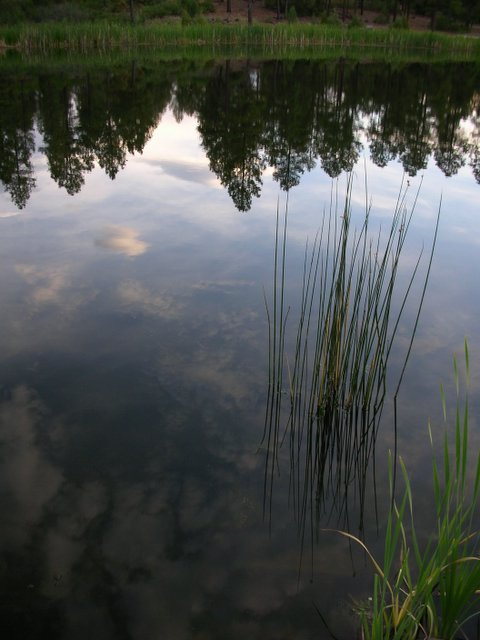
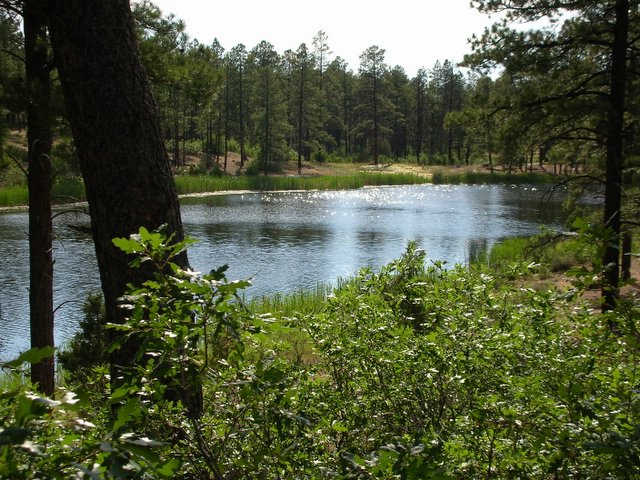
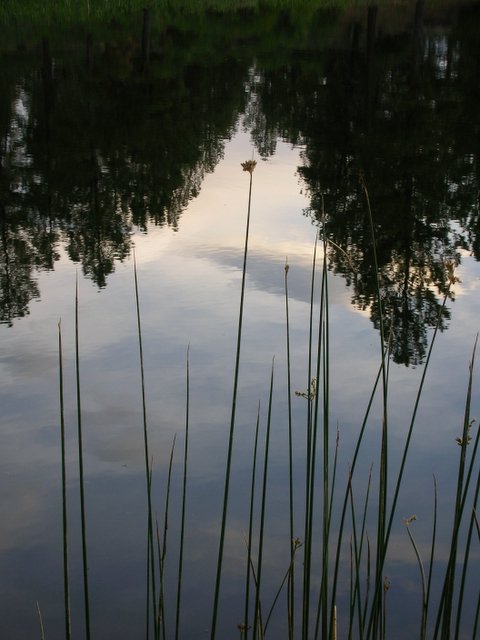
Posted by Picasa The private lake was a wonderful peaceful refuge, but it was teeming with life. Ducks and cranes and turtles, and we even saw one beaver swim by. Saw more evidence of beavers from trees knawed down, and a fair sized beaver dam.

We stayed at several exceptional B&B's in New Mexico and Colorado. This private lake was just outside our window at the Lost Canyon Lake Lodge, between Mancos and Dolores, in SW Colorado. Posted by Picasa

The weather was cool and sometimes rainy, and repeatedly delivered double rainbows. (Ouray, Colorado)

 Posted by Picasa

An upclose and personal way to view the magnificent landscape

 Posted by Picasa

The train goes alongside, and above, the Animas River

 Posted by Picasa

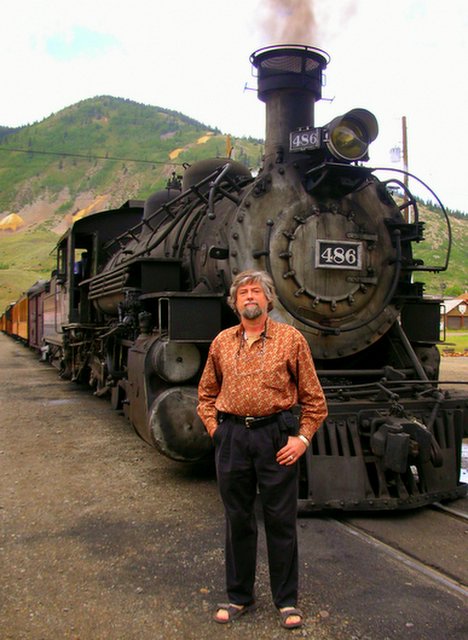
Riding the Durango to Silverton Narrow Gauge (San Juan mountains in Colorado)

 Posted by Picasa

Friday, June 23, 2006

I've been working for ESPN/ABC for the NBA Finals, mostly for Sports Center and NBA Nation. I usually don't work much sports, so this was a real treat to be on the scene of the biggest sporting event we've had around here (Dallas) for a few years.

I'd only followed the Mavericks casually this year until the end of the regular season--but I'd become a semiserious fan during the playoffs, so I'm really grateful to get to work around the games here. And it really looked like they had the Heat's number, until the last few minutes of the third game. There were lots of glimmers of brilliance after that, but losing four games in a row was one dramatic reversal of fortune. Posted by Picasa

Friday, March 31, 2006

The Miracle of Compound Interest

I've been exploring quite a variety of internet "forums" or "newsgroups" lately, partly because I intend to set up one for the buyer's of an E-Book I'm writing. Still haven't got the title, but tentatively, it's something like "More Fun with Digital Photography".

There's thousands of forums, all manner of special interests, and amazing conversations that go on. Gotta be careful, they can be voracious Time Leaches.

One that I posted on today is the forum for Investment U.
www.InvestmentU.com
It's a free educational service, with weekly email newsletter, and other services including a new forum, which I just entered today.

One person had asked for help--said he'd considered starting investing when he was about 20, but had been too afraid. But now he's newly married and has a daughter to help support, and wonders if it's too late to start.

Another forum member replied with good advice:

"1) Set a goal.
2) Write down your goal.
3) Create a plan. (Those who fail to plan, plan to fail).
4) Seek out a mentor or teacher/coach you can learn from.
5) Based on what you learn, revise your plan so that it has a greater chance of success.
6) Keep visualizing your success.

(Michael Masterson) estimates you will need 1000 hours to become competent in a field, 5000 hours to become a master, and that time can be cut by 25% or so with a good teacher/coach.
So if you devote 10 hours per week to learn investing, you will need up to 100 weeks to become competent (2 years) or 500 weeks (10 years) to become a master.
In other words, what you want won't happen overnight.
Persistence is going to be the key. "

My contribution:

That was excellent advice.
And as far as investing is concerned, a few years of steady experience is about right to become competent (provided you learn steadily from your experience).
I'd caution you not to try to jump into being too aggressive too quickly.

But do get started.
No matter how small.
If your investable funds are going to be very modest for a while, you might buy individual stocks via DRIP programs. There's a local writer Scott Burns here in Dallas who recommends various varieties of Couch Potato Portfolios, based on stock and bond indexes.
(Be sure to maximize your tax savings via IRA/401K's, etc.)
There are lots of sane ways to get started.
Doesn't matter so much which one you pick.
Just get started.
Do a plan.
Then work to gradually improve your results.
As you gradually become more competent as an investor,
and gradually accumulate more capital,
you can gradually ratchet up the level of aggressiveness in your investments.
But always focus as much or more on NOT LOSING MONEY as you do on your rate of return.

One VISUALIZATION TOOL that helped me get started:
Find one of those compound rate of return calculators, where you can plug in an initial amount of investment, and a periodic contribution (like $100 month or whatever), which will extrapolate out what you'll accumulate after so many years. Look at what that does in 20 years or so, and you'll be mighty motivated. It's fun to plug in different contribution rates, and different rates of return, to see what that does over the long run.
Just for instance, according to a calculator @ http://www.dinkytown.net/java/InvestmentReturn.html
If you start with nothing, but invest $200 month @ 20%, after 24 yrs you'll have well over a million dollars ($1,130,355). That's assuming no taxes (use IRA) and without considering inflation.

I'm not so sure that Einstein really said that compound interest was the most powerful force in the universe, but anyway, it's plenty powerful!

Monday, March 06, 2006

World's looking flat, but volcanos simmering

Read some interesting thoughts today at "The Daily Reckoning"--Bill Bonner is chiding Thomas Friedman's idea that "The Earth is Flat", that globalization has carried us into an entirely new world of opportunity:

"Thanks to modern technology and the spread of robust American-style capitalism (to say nothing of the protection racket run by the empire's military forces), we all play on the same level field of global commerce. We also wear the same clothes...talk the same language (English), share the same political ideology (humbug democracy), and worship the same God (mammon)."

Of course Friedman's "Flat Earth" is an important part of what's happening--most of our high tech toys, and even our clothes, are manufactured in China, or other points east. China makes 'em, we buy 'em. We go deeper into debt, but China lends it back to us, at pretty low interest (for now). We need them, but they need us just as bad. For awhile now, we've had it pretty good. The toys get cheaper, and even if we don't earn any more money, nowadays it's easy to be a debtor: our government borrows from China and Japan, our household borrows from HEL (Home Equity Loans).

But Bonner cautions there may be unstable forces of tectonic scale simmering beneath this apparently "flat" world we've become so fat and happy in.

One big instability is increasingly skewed wealth distribution. Within the U.S. and the rest of the "first world", the business owners and investors are getting richer, benefiting from globalized markets. But most of the workers, from auto assemblers to pilots to IT pros to filmworkers, are seeing their incomes stagnate and decline.

I was struck by something called the "Gini Index", which is a measure of income disparity:
"Economists measure wage equality with way they call a Gini Index. At zero, people all earn the same thing. At 100, the rich get all the income.
Currently, in Japan the Gini Index is 25. In Europe, it is 32. In America, the index is at 40, and in China, it is at 45."

If the Gini index is a measure of instability, it's striking how close we are to China on that measure.

Bonner concludes:
"In America, low-level earners can't get ahead because they have no bargaining power. They are competing with a billion workers in Asia willing to do the same work for less than one-tenth the cost. And in China, there is also growing income inequality between those who have joined the global economy and those who have not. Some 500 million people live in coastal cities in China and participate in modern commerce, but there are another 700 million who still live in the countryside. While the cities grow richer, the poor in China are left behind, like America's industrial workers.

In short, the world is not getting flatter at all. It is getting flatter in some areas, and steeper in others. There is less difference between China's industrial workers and those in America, but the difference between the globalized wage slave and the capitalists who employ them is growing.

Beneath the surface of Friedman's flat Earth, the pressure is growing -either in China or in America and sooner or later, it is bound to explode."

(Bill Bonner is one of many contributors to "The Daily Reckoning", a free daily newsletter on economics, investments, politics, etc. @ www.dailyreckoning.com

Thursday, December 22, 2005

Great Quotations about Light

"Where there is much light, the shadow is deep." -- Goethe

"Turn your face to the sun and the shadows fall behind you."
-- Maori Proverb

"You can't have a light without a dark to stick it in."
--Arlo Guthrie

These are some favorite quotes of mine, which I've been using in my email signature for a couple months. I've been surprised that nobody has commented on them. I think they're really neat individually, and the juxtaposition of them strikes off new sparks every time i notice and read them.

The Goethe and the Maori quotes work as literal statements of the way light works in the physical world of vision and perception, but they also reverberate profoundly of another dimension of spirit, of duality and unity beyond duality. And lest I get too serious, Arlo brings me back down to the ground.

Don't know much about Goethe, except that he sure did say some powerful pithy quotes. And also he did "Faust." My roommate in college my freshman year was fluent in German, and he said he thought Goethe was a greater writer than Shakespeare. I was too anglocentric to buy that, but now I'm thinking intrigued about it. Won't be learning German though, and I'm grateful I came by English the easy way.

One of my many pleasures/diversions/timewasters online is collecting quotes, and several by Goethe are great.

"I love those who yearn for the impossible"

"Whatever you think you can do or believe you can do, BEGIN IT. Action has magic, grace, and power in it."
--Goethe


"Action is eloquence"

"All glory comes from daring to begin."
--William Shakespeare

Thursday, November 10, 2005

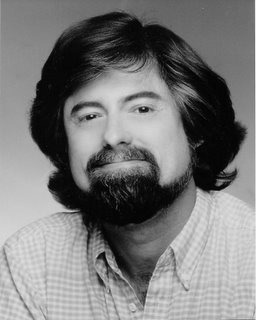
Mike with hdcam

 Posted by Picasa

First Blog Post--Old Master's Paintings Style

Just getting started, mostly exploring and puttering, definitely not settled on a single direction or focus (for this blog, I mean, and maybe more).

What's a blog good for? -- public diary, forum to explore and promote my interests, or maybe just a great diversion. ??

Anyway, there's clearly lots of exciting potential in this medium, so I'm glad to be starting, and since I don't know where I'm going with this, it's all possibility. Open possibilities--no visible limits. That is exciting.

One of my interests in my longtime career as a cameraman, is lighting. Viewing what natural and manmade lights do when they illuminate people and objects, and exploring how these can be worked with to create and finesse images.

Here's something I posted this morning on a local listserve here in Dallas, responding to a question from a film student about how to light her interviewees for a documentary she's beginning.

LIGHTING - Old Master's Paintings Style - ADVICE NEEDED
What Jim said is correct, but I would say it a little differently regarding “single strong point source light on the key side”.

The key should be strong in the sense that it is dominant in the scene, but a candle flame can be just as dominant in the scene as full sunlight, if there’s nothing else to illuminate the scene. Of course you need adequate exposure for your camera system (NO gain).

In fact a candle can be effectively “stronger” than the sun, because direct sunlight usually is accompanied by bluish fill light, from the rest of the sky (usually about 3 stops lower than the “key” from the sun).

For “Chiarascuro” the key should be set at a low angle, and extremely to the side, so if your subject were a sphere, only half or less of it would be lit, and the dark side is very dark, nearly black with very little fill light. Normally this will be in a dark room, where the only light source is the key, and perhaps a very low fill light, and perhaps a back light on the subject, and a low level background light. I’d start by setting the key to work, keep it off the background, and only add anything else if necessary.

The choice of background will be important—generally you’ll want it to be dark. One fashionable look employed in docs is a relatively extreme side key on the subject, against a totally black background, like a flat black cloth.

Rather than a pointsource, the key itself can actually be a softlight, to simulate “north light”. (The “Old Masters” studios had large windows on the North side, that gave a very large softlight from the skylight). What makes it “chiaroscuro” is the angle of the key extremely to the side, with dark background, and little or no fill.